
 A history of balloons, spanning centuries and combining elements of science, creativity, and culture. Although balloons are now a staple in parties, celebrations, and events, their beginnings were quite different. The story of balloons began not with festivities but in the scientific realm, where early scientists used balloons to conduct groundbreaking experiments.
A History of Balloons, The Beginning.
The first recorded use of something resembling a modern balloon was in the early 19th century. In 1824, British scientist Michael Faraday, a pioneer in chemistry and electromagnetism, developed what could be considered the first rubber balloon. He didn’t create it for fun but as a tool for his experiments with hydrogen gas. Faraday crafted his balloon by pressing together the edges of two rubber sheets, which he then filled with hydrogen. This rubber prototype allowed him to study gas containment in a previously impossible way. It also sparked the curiosity of others who saw the potential for rubber balloons beyond scientific use.
Not long after, the idea of a balloon started to shift from a scientific tool to an entertainment and recreational item. Around the same time, an Englishman named Thomas Hancock, an early figure in the rubber industry, began selling balloon-making kits. These kits enabled people to make their own small rubber balloons at home, sparking the first wave of recreational balloon use. The novelty of balloons quickly captured the public’s imagination, making them popular at fairs and other gatherings where people marveled at these unique floating objects. This transition marked the beginning of balloons becoming widely accessible and a symbol of fun.
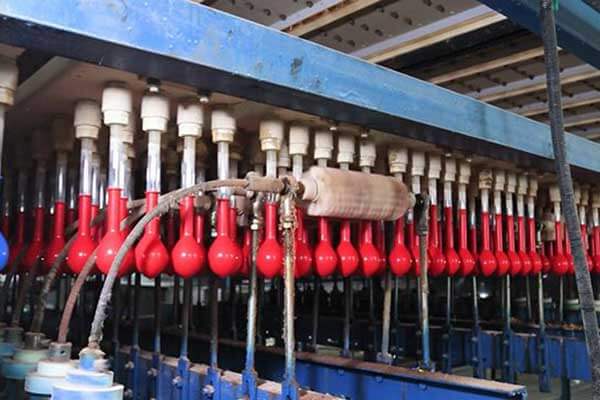
As industrialization advanced and the rubber industry grew, so did the design and production of balloons. By the early 20th century, latex (a natural material derived from rubber trees) was discovered to be more elastic and affordable than the rubber used in Faraday’s original balloons. The mass production of latex balloons began in the 1930s, revolutionizing the industry. Latex balloons were easier to manufacture in large quantities, more durable, and could hold vibrant colors. This meant they could be made cheaply, which further popularized balloons at events of all kinds. Balloon manufacturers began experimenting with new shapes, sizes, and colors, allowing people to get creative with balloon displays and designs.
Modernization of Balloons
The world’s love affair with balloons didn’t stop at latex. The 1970s saw the emergence of foil (or Mylar) balloons. Unlike latex, foil balloons are made from a thin, flexible material coated with metallic finishes. Not only do they hold helium longer, but they also provide a shiny, reflective surface allowing for detailed designs and printing. Foils opened the door for specialty balloons. Now, people could get balloons in the shape of numbers, letters, or even characters, elevating balloon decor to an art form.
In recent decades, balloons have become a powerful medium for both celebration and expression. From intricate balloon arches at weddings and corporate events to creative sculptures which bring themes to life at parties, balloons are now used in décor to make a statement. They’re also used for various awareness and community events. These displays turn ordinary spaces into vibrant, memorable environments, bringing joy and wonder to people of all ages.
Balloons Today
But the appeal of balloons goes beyond their aesthetic value. Their very nature—light, airy, and ephemeral—symbolizes joy, celebration, and the desire to elevate everyday moments. A simple balloon, when released, rises toward the sky, embodying hope, freedom, and excitement. This symbolic power has kept balloons a beloved part of our culture for generations.
As we look at the history of balloons, it’s clear they have come a long way from their humble beginnings in Faraday’s lab. What started as a scientific experiment has transformed into an art form and a universal symbol of celebration. Today, balloons continue to bring people together adding a sense of wonder to gatherings around the world. So, the next time you see a balloon, remember: it’s more than just a decoration. It’s a piece of history floating its way into our hearts and celebrations. Lifting our spirits and reminding us of the lightness and joy we all crave in life.